Home › Industrial and Heavy-Duty Asphalt Paving
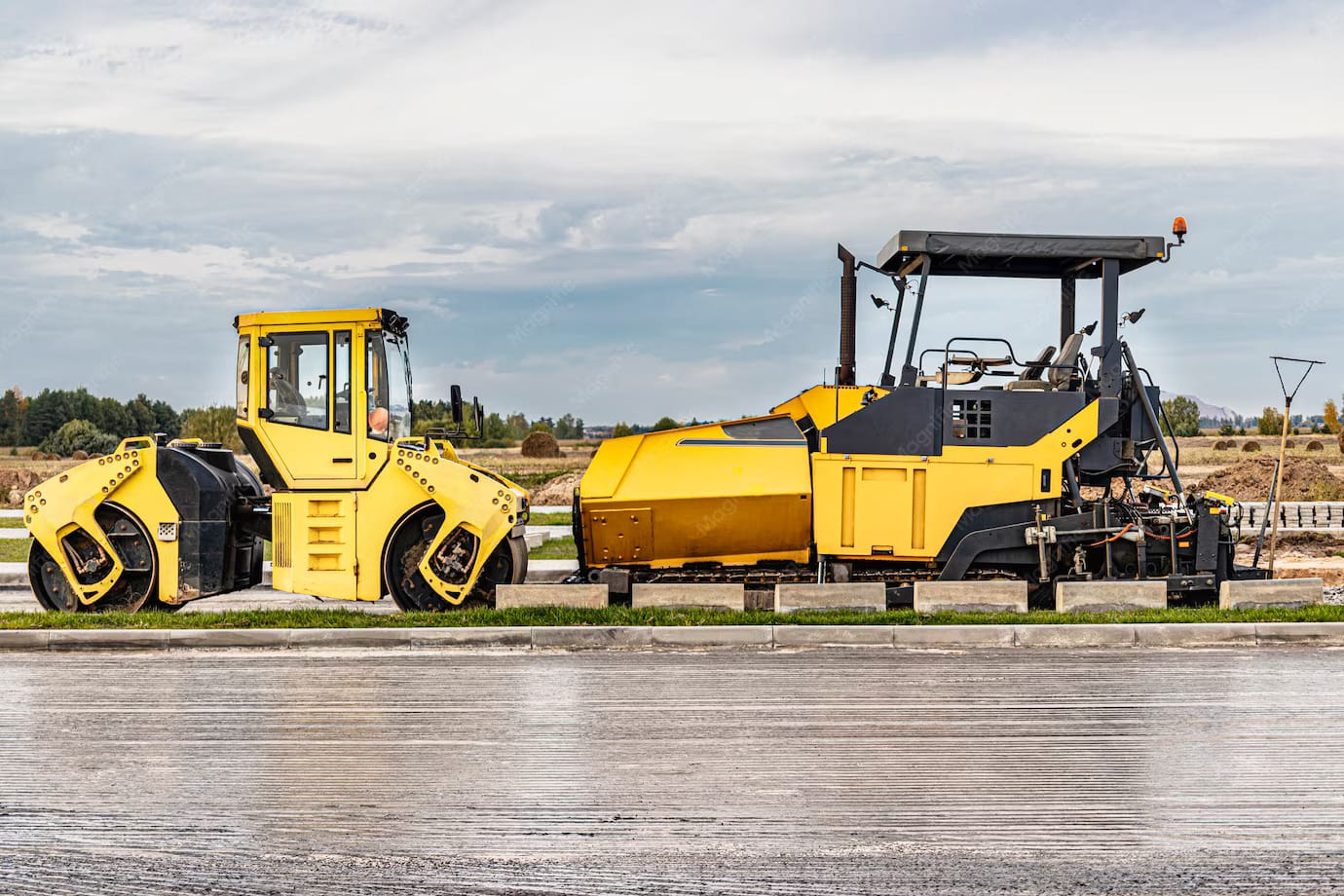
We provide industrial asphalt paving in St Petersburg, FL built to handle heavy trucks and equipment. Our designs include thicker sections, reinforced bases, and proper loading dock details. From truck courts to warehouse aprons, we install heavy duty asphalt that resists rutting and premature failure.
Precision Asphalt St. Petersburg provides professional industrial asphalt paving throughout St Petersburg, FL, Florida and the surrounding area. Our licensed, insured crew delivers safe, clean, on-time work with a free estimate before anything begins. Call (727) 263-2016 or request your free quote.
Industrial Asphalt Paving Built for Heavy Loads in St. Petersburg
Industrial and heavy-duty asphalt paving is not the same as putting in a neighborhood driveway. At Precision Asphalt St. Petersburg, we design pavements for forklift traffic, container loads, daily semi trucks, and constant turning movements that would quickly destroy light-duty asphalt.
When you call us about industrial asphalt paving, we start by asking how your site is used. We want to know truck sizes and weights, turning patterns, where loading and unloading happens, whether you store containers or heavy equipment, and how often those areas see traffic. A distribution yard off 34th Street N needs a different pavement design than a manufacturing plant by the Port of St. Petersburg.
From there, we determine the asphalt mix type, base thickness, and any concrete or reinforcement that needs to be integrated in high stress zones. Our crews build for the heaviest realistic use, not just what is on the plans today, so your pavement holds up if your operations grow over the next 10 to 20 years.
How Heavy-Duty Asphalt Paving Is Installed Step by Step
Good industrial asphalt paving starts under the surface. In St. Petersburg we often see soft subgrade soils with high moisture. Before we bring in a single ton of asphalt, we proof roll the area with a loaded truck or roller to identify weak spots. Any pumping or rutting tells us where subgrade needs to be undercut, stabilized, or both.
Once the subgrade is stable, we bring in crushed aggregate base, usually a DOT approved mix. For heavy-duty work areas and truck lanes, that base can be 8 to 12 inches or more, compared to 4 to 6 inches in light-duty parking. We place the base in lifts, compacting each layer with vibratory rollers and checking density so it does not settle later under loaded axles.
Next is the binder course, a thicker, coarser asphalt layer that carries most of the structural load. For industrial asphalt paving we typically use a PG-graded binder suited to Florida heat, and we keep air voids and density within tight specs to resist rutting. The surface course is a finer mix that gives you a smoother ride, better drainage, and a safer walking surface for employees and visitors.
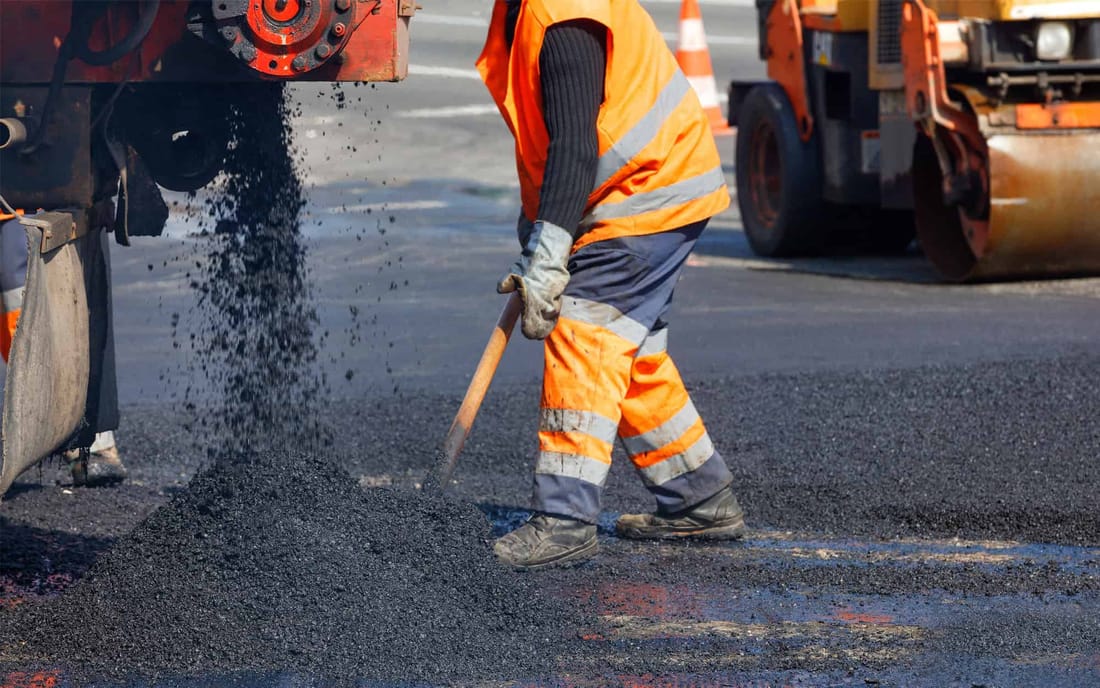
In extremely high stress areas, such as where semi trucks make tight turns near loading docks, we may recommend thicker asphalt sections, a stiffer mix, or even doweled concrete aprons that tie into the asphalt. Our crews cut and tack joints correctly, maintain a consistent mat temperature, and compact the surface immediately behind the paver so you get a dense, long lasting pavement instead of a brittle one.
Local Conditions, Drainage, and Permitting in Pinellas County
Industrial pavements in St. Petersburg have to survive heat, daily sun, and heavy rain. If drainage is not handled correctly, you will see potholes and base failures far sooner than you should. At Precision Asphalt St. Petersburg, we slope industrial yards and truck courts so water moves to drains, swales, or retention areas instead of sitting in wheel paths.
For many commercial and industrial projects in St. Petersburg and unincorporated Pinellas County, you will need site plans that address stormwater management. We coordinate with your engineer or architect and build to the grades shown on the approved drawings. Where needed, we install or adjust inlets, valley gutters, and valley pans so water does not pond at dock doors or pedestrian entries.
Permits and inspections vary, but larger redevelopments and new construction typically go through City of St. Petersburg permitting and may also involve SWFWMD for stormwater. We are familiar with local inspection expectations, such as proof rolling, base density checks, and asphalt thickness verification. Our team keeps compaction and delivery tickets on file so if an inspector or property insurance carrier has questions later, you have documentation on how the pavement was built.
We also plan our paving work around Florida’s afternoon storms whenever possible, scheduling larger pulls in the morning and watching radar. Laying heavy-duty asphalt on a wet base or under a surprise downpour can ruin the bond between layers, so we do not push production at the cost of quality.
What Drives the Cost of Industrial Asphalt Paving
Two industrial sites with the same square footage can have very different paving costs, and we explain that up front. The biggest drivers are pavement thickness, base preparation, and access.
Heavier truck traffic requires thicker asphalt and more base. A warehouse that sees occasional box trucks might use a 6 inch asphalt section over 8 inches of base. A container storage yard with loaded trailers may need 8 to 10 inches of asphalt and 12 inches or more of base, or a combination of asphalt and reinforced concrete in the hardest hit zones. Those extra inches matter when you are buying thousands of tons of material.
Existing conditions also play a role. If your current pavement is badly alligatored or pumping water, it is rarely smart to just overlay. In those cases, we may mill off the existing asphalt, stabilize or replace the base, and rebuild the structure. Soil conditions on parts of St. Petersburg’s west side near the Intracoastal can require more undercutting and stabilization than inland industrial parks, and we price accordingly instead of giving one-size-fits-all numbers.
Access, phasing, and downtime impact cost as well. If we need to keep certain dock doors open or maintain fire lanes, we break the work into phases and return multiple mobilizations, which adds labor and equipment time. We work with you to find a schedule that keeps your operation running but still allows us enough continuous area to build strong, uniform asphalt sections.
Our quotes from Precision Asphalt St. Petersburg are itemized so you can see how much you are paying for milling, base work, asphalt thickness, striping, and any concrete features. That transparency helps facility managers compare options and prioritize where to invest in heavier duty pavement versus standard sections.
Common Industrial Pavement Problems and How We Prevent Them
Heavy-duty asphalt fails differently than light-duty parking lots. The most common issues we see in local industrial sites are rutting in wheel paths, shoving where trucks brake or turn, edge failures where paving tapers off to dirt, and early cracking over utility trenches.
To prevent rutting and shoving, Precision Asphalt St. Petersburg uses mix designs that can handle high pavement temperatures and heavy axle loads. We watch compaction closely. Too little compaction leaves voids that collapse under load. Too much rolling, especially when the mat is too cool, can crush aggregate and weaken the structure. We keep our rolling pattern consistent and check densities as we go.
Edge failures are usually a design problem. We avoid leaving unsupported asphalt edges in industrial zones. Instead, we tie asphalt into concrete curb, stabilized shoulders, or thickened edge sections so the pavement does not break off when a trailer drifts toward the side. For drive entrances onto city roads, we build transitions that meet local standards so they hold up under constant turning and braking.
Trenches and utility cuts are another weak spot. When we know utilities will cross the pavement, we plan reinforcement and compaction around those areas. If we are repairing an existing industrial asphalt pavement, we saw cut clean edges, excavate to solid base, rebuild the base and asphalt in layers, and seal joints so water does not infiltrate where the new work meets the old.
Finally, we talk with owners about maintenance. Even heavy-duty industrial asphalt benefits from periodic crack sealing, drainage checks, and, when appropriate, sealcoating on lower stress areas. A short, regular maintenance visit every year or two in St. Petersburg’s climate can add many years to the life of your industrial pavement and delay the need for major reconstruction.